
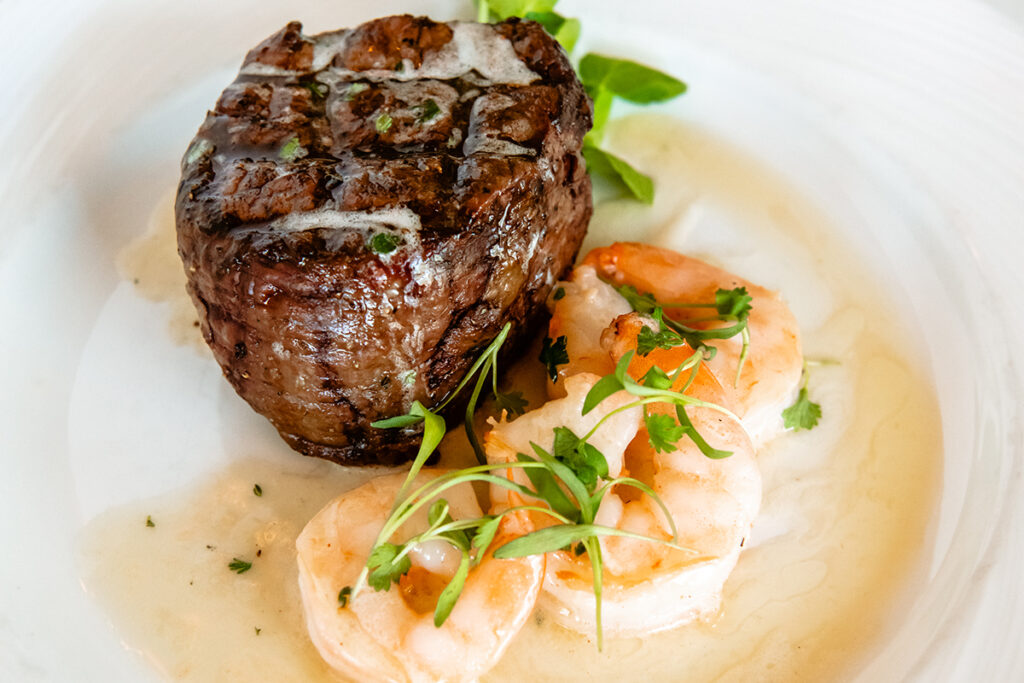
Every steak on a menu makes a promise, but not every cut delivers the same richness. A lot of that comes down to marbling, the fine threads of fat that shape how a steak tastes, feels, and sears.
At Eddie Merlot’s, that difference shows up the moment a knife meets a USDA Prime ribeye and the marbling gives way to a rich, buttery bite. If bold, fat forward flavor is what you’re after, here’s where to find it.
And if you’re leaning toward the leanest cut of steak instead, our guide to the healthiest cuts of steak covers that side of the menu too.
Why Fat Matters When It Comes to Steak
Marbling Is the Key to Flavor
Marbling is the fine lacing of fat woven through the muscle, and it’s the biggest reason certain cuts of meat taste richer than others.1 As a steak cooks, that fat melts and bastes the meat from the inside, keeping it juicy even if it spends an extra minute on the grill. The more fat woven through, the more forgiving and more flavorful the result tends to be.
Fat vs. Lean: It’s a Trade-Off
Fattier cuts bring bolder flavor and more room for error at the grill. Leaner cuts trade some of that richness for a lighter bite and a shorter list on the nutrition facts panel.
Guests looking for lean cuts of steak often ask about:
- Flank steak, skirt steak, and flap steak
- Top sirloin, bottom sirloin, and sirloin cap
- Round steak, top round, and eye of round
- Denver steak and hanger steak
Top sirloin steak is usually where we point guests chasing our leanest cuts. It’s considered the leanest cut on our menu without giving up real beefy flavor. Lean beef and lean meat typically contain less fat than a well-marbled ribeye, and guests who watch their fat intake often reach for lean cuts of beef instead.
A lean steak cooked well can be just as satisfying as a fatty one, it just asks for closer attention at the grill. Between the lean and fatty cuts, and good fat versus bad fat, there’s no wrong answer, just the amount of fat you’re in the mood for. A well-trimmed top round is one of the healthiest ways to enjoy steak, fitting easily as part of a healthy diet when portioned with care.
The Fattiest, Most Flavorful Cuts of Steak
Ribeye
Ribeye steak comes with a reputation for being the richest cut on the menu, and it earns it fast. It’s one of the most popular choices for guests chasing bold, fat-forward flavor, especially once the marbling starts to show under the light. Fat running through the eye and along the cap bastes the meat as it cooks, leaving a rich, almost buttery finish.
Bone-in versions, like the cowboy cut or the full tomahawk, only add to the drama at the table. Ask your server which preparation is running that night.
Short Rib
Short rib is a fatty cut through and through, with thick seams of fat and connective tissue woven into every bite. Among fatty cuts of beef, it rewards patience more than speed. Hours in a slow cooker or low, steady heat let the collagen melt into something silky rather than tough.
Porterhouse & T-Bone
Porterhouse and T-bone steaks settle the tenderloin-versus-strip debate by putting both on one plate. The tenderloin and strip steak sit on either side of the bone, so a bite in either direction offers something different: buttery softness on one side, rich, beefy chew on the other.
Guests who want variety without ordering two entrees tend to land here.
New York Strip
New York strip has a firm bite and a defined fat cap along one edge that renders nicely as it cooks. It’s slightly leaner than ribeye, but the flavor is more concentrated. A Prime graded strip steak is considered noticeably richer than a Choice graded one of the same size, which is still worth asking about before you order.
Flat Iron
Flat iron has earned a steady following on steakhouse menus, and the marbling is part of why. Cut from the shoulder, it’s the second most tender muscle on the animal after the tenderloin.2 It still carries a robust, beefy flavor that doesn’t come with a tenderloin price tag.
Prime Rib
Prime rib comes from the same rib section as ribeye, but the whole roast cooks low and slow, so the fat cap on the outside bastes the meat as it goes. Thick slices reveal a rosy, medium-rare center under a well-browned crust, the kind of presentation built for a celebration.
How Grade Affects Fat Content
USDA Prime vs. Choice vs. Select
The cut only tells half the story. Grade decides how much of that marbling actually shows up on the plate, whether you’re looking at ribeye or one of the various cuts further down the menu.3
Here’s how the three grades compare:
- Prime – the most marbling of the three grades, spread evenly through the meat
- Choice – noticeably less fat than Prime, but more than Select
- Select – trimmed down to a leaner, milder option
Different cuts of beef carry different amounts of natural marbling to begin with, so grade and cut work together to shape how rich a plate turns out. A Prime grade tenderloin will still read leaner than a Choice ribeye, which is exactly why premium beef programs pay attention to both.
Why Prime Cuts Are Prized for Flavor
More visible flecks of fat usually mean a richer bite. Flavor has become the top priority for most steak lovers, ahead of tenderness or price.4 It’s part of why Prime keeps its reputation at steakhouses like ours. That same richness shows up across nearly every one of our beef cuts, from strip to prime rib.
That marbling also forgives small mistakes in the cooking process. A slightly overcooked Prime ribeye can still taste juicy, because there’s enough fat woven through to compensate, something a leaner cut won’t offer as easily.
How to Order the Fattiest Cut at a Steakhouse
Ask Your Server About Marbling
Our servers can point you toward the most heavily marbled options on the menu, cut by cut, and share the cooking method that best suits each one. Ask how they’d cook the steak, or which cuts are running richest tonight; a good server welcomes the question and usually has an opinion worth hearing.
The best way to cook a well-marbled steak is often the simplest: high, direct heat, a confident sear, and a short rest before the knife touches the plate. Whether it’s grilling or pan-searing that gets the crust right, our kitchen adjusts the cooking method to the cut, not the other way around.
When it’s time to sear the steak, resist the urge to move it too soon. A still pan builds the crust, making the steak worth ordering in the first place. Slicing steak against the grain afterward, especially on tougher cuts like flank or skirt, makes every bite easier to chew.
Pair Fattier Cuts with the Right Sides & Wine
Bold reds with real tannin, like Cabernet Sauvignon or Malbec, cut through a fattier cut and reset the palate between bites. Keep sides simple: asparagus, a crisp salad, or roasted vegetables let the steak stay the center of attention.
For a deeper look at what pairs with what, our wine and steak pairings page breaks it down cut by cut.
Taste the Difference at Eddie Merlot’s
Every steak at Eddie Merlot’s starts with the same standard: hand-selected USDA Prime beef, chosen for marbling before anything else. Whether you order a ribeye or a leaner cut off the menu, our team can walk you through what makes each one worth ordering.
Some nights call for the richest, most fat forward cut in the house. Others call for something lighter. Either way, you’re getting some of the tastiest cuts of beef we carry, prepared by a team that treats every plate like it matters.
Find an Eddie Merlot’s location near you, and book a reservation for an evening built around a steak worth talking about.
Sources
- Institute of Meat Hygiene and Technology. Key parameters affecting the sensory quality of beef: a review. https://doi.fil.bg.ac.rs/pdf/journals/meattech/2025-3/meattech-2025-66-3-66.pdf
- PBS. Steak Science. https://www.pbs.org/video/steak-science-msrtqq/
- USDA Food Safety and Inspection Service. What do beef grades mean? https://ask.fsis.usda.gov/article/What-do-beef-grades-mean
- Kansas State University. Better beef for your budget. https://extension.k-state.edu/news-and-publications/news/stories/2025/09/agriculture-beef-for-your-budget.html